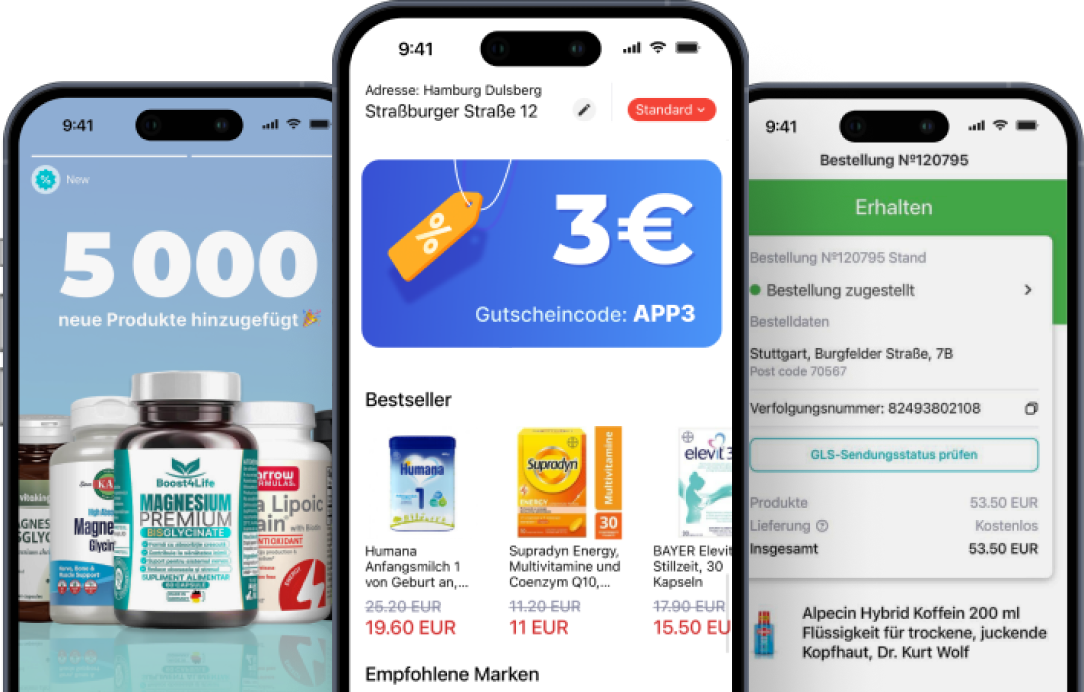
Promo code APP3 – € 3 discount on your first order in app
  Free delivery for orders over € 49


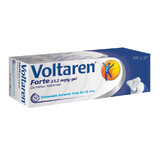
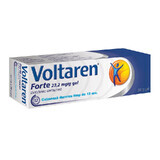
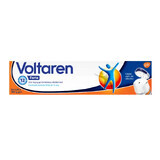
VOLTADOL FORTE 20 MG/G TOPICAL GEL 50 G
Description
Action and mechanism
- Topical anti-inflammatory and analgesic. Diclofenac is a non-steroidal anti-inflammatory drug derived from phenylacetic acid. It works by preventing the synthesis of prostaglandins and other prostanoids by inhibiting cyclooxygenase, which is involved in inflammatory processes.
Pharmacokinetics
Topical route:
- Absorption:
* Gel: Bioavailability of 6%. Cmax is 15-53.8 ng/ml, reached 10-14 hours after application.
- Distribution: High plasma protein binding (99%), primarily albumin. Vd 1.3 l/kg.
- Metabolism: It is almost completely metabolized in the liver, through hydroxylation reactions and conjugation with glucuronic acid.
- Elimination: It is eliminated in urine (65%) and bile (35%), mainly as conjugated metabolites. Small amounts of unchanged diclofenac are detected in urine and bile. The half-life is 2 hours.
Indications
- [PAIN]. Symptomatic treatment of acute inflammatory and/or painful processes, such as:
* [CONTUSION] or [SPRAIN] caused by twists.
* [TORTICOLLIS] or other [CONTRACTURE].
* [LOW BACK PAIN].
Posology
- Diclofenac Kern Pharma, Diclokern, Voltadol and Voltadol Forte (adults and adolescents over 14 years): apply a thin layer (2-4 g of gel, equivalent to the size of a cherry or walnut, respectively), 3-4 times a day or 1 application every 12 hours (preferably morning and evening) in the case of Voltadol Forte.
Rules for correct administration
It should be avoided in areas of skin with dermatitis, open wounds, burns, or infections, and the area should be covered with occlusive dressings, as this could promote greater systemic absorption of diclofenac.
Its application near the eyes, as well as on mucous membranes, should be avoided.
After application, hands should be washed unless they are the treatment site.
If symptoms persist or worsen after 5 days of use, it is recommended to consult your doctor and/or pharmacist.
- Emulsion, gel: Apply to the area to be treated, massaging until the gel is absorbed. Wash your hands afterwards.
Contraindications
- Hypersensitivity to diclofenac or any other component of the medication. There have been reports of cross-allergic reactions between different NSAIDs, as well as with salicylates, so diclofenac is not recommended in cases of [NSAID ALLERGY] or [SALICYLATE ALLERGY].
- [PEPTIC ULCER] active. Although topical application limits the absorption of diclofenac, its use is not recommended in patients with peptic ulcers due to the potential for ulcer aggravation.
Precautions
- [PHOTOSENSITIVITY REACTIONS]. Diclofenac has caused photosensitivity reactions. It is recommended not to expose the treated areas to the sun or UV light for at least one day.
- Systemic reactions. The risk of systemic reactions to topical diclofenac is minimal, although it cannot be ruled out if significant systemic absorption occurs, as may occur if applied to damaged skin (dermatitis, burns, wounds) or with an occlusive dressing. It is recommended that patients with asthma, a history of peptic ulcer, kidney or heart failure, or hypertension adhere to the dosage recommendations.
Warnings on excipients:
- Because it contains butyl hydroxytoluene as an excipient, it may produce local skin reactions, such as contact dermatitis, or irritation of the eyes or mucous membranes.
Warnings on excipients:
- This medicine contains propylene glycol, which may cause skin irritation.
Patient Advice
- You should consult your doctor and/or pharmacist if you have previously reported allergic reactions to other anti-inflammatory drugs, including aspirin.
- Do not cover the area with occlusive dressings.
- It should not be applied to areas of skin with burns, open wounds, dermatitis or infections.
- Do not expose treated areas to the sun or UVA light sources until at least one day after the last application.
- If symptoms persist or worsen after 3 days of use, consult your doctor and/or pharmacist.
- Apply to the skin, massaging until the gel is absorbed.
Interactions
No interactions have been reported at the recommended doses. However, in the case of significant systemic absorption, the same interactions as with systemic diclofenac may occur.
Additionally, as with any topical treatment, it is not advisable to administer two topical medications at the same time on the same area.
Pregnancy
- FDA Category C(D). Category C during the first 30 weeks of pregnancy and Category D starting at week 30 of pregnancy. Approximately 10% of the topical dose is absorbed systemically, with considerably lower bioavailability after topical administration than after oral administration. Adequate and well-controlled human studies with topical diclofenac are lacking, but systemic diclofenac has been shown to cause fetal toxicity in late pregnancy. Although cutaneous absorption is minimal, systemic effects cannot be ruled out.
Topical use of diclofenac during the first two trimesters of pregnancy is only acceptable if, in the absence of other safer therapeutic alternatives, the benefits outweigh the potential risks.
The use of diclofenac during the third trimester of pregnancy is contraindicated, as diclofenac has been associated with delayed delivery and adverse cardiovascular effects in the fetus, such as premature closure of the ductus arteriosus and pulmonary hypertension, and renal effects, such as acute renal failure and oligohydramnios. It may also increase maternal bleeding time.
Lactation
It is unknown whether topical diclofenac is excreted in breast milk, and what consequences this may have for the nursing infant. Approximately 10% of the topically applied dose is absorbed systemically. Systemic diclofenac is excreted in small amounts in breast milk. Some experts support the use of topical diclofenac during breastfeeding. The manufacturers advise discontinuing breastfeeding or avoiding its administration.
Children
See Dosage.
Seniors
The elderly may be especially susceptible to adverse reactions from diclofenac, so caution is advised when using it.
Adverse reactions
- Dermatological: Frequent (1-10%) local reactions in the application area, such as [PRURITUS], [SKIN IRRITATION], [ERYTHEMA], [EXANTHEMATOUS ERUPTIONS], with the appearance of pustules or papules on occasion.
- Allergic: Uncommon (0.1-1.0%) [HYPERSENSITIVITY REACTIONS], [CONTACT DERMATITIS]; isolated cases of [ANAPHYLAXIS], [ANGIOEDEMA] and [PHOTOSENSITIVITY REACTIONS].
In case of significant absorption, systemic adverse reactions of diclofenac may occur.
Overdose
Symptoms: Due to its route of administration, symptoms are not very likely to appear in the event of an overdose, although accidental ingestion or improper application could produce typical systemic adverse effects.
Treatment: In case of accidental ingestion, stomach lavage and symptomatic treatment will be performed.
Features
| Product code | 504963 |
| Category | Joints and Bone System, Bone and Muscle Diseases, Promotions, Useful kits, Health and wellness products -35% |
| Product line | Voltaren |
| Brand | GSK |
| Range | Forte |
| Volume | 50 g |
| Delivery from | Spain |
VOLTADOL FORTE 20 MG/G TOPICAL GEL 50 G
VOLTADOL FORTE 20 MG/G TOPICAL GEL 50 G

-
€ 22,70€ 17,50
-
 Pay securely with your preferred payment method













Recently viewed products














Reviews

VOLTADOL FORTE 20 MG/G TOPICAL GEL 50 G
 Earn € 1 Reward for every review
- For each submitted and approved review you can earn € 1 Reward on your Rewards Credit.
- Rewards are given once for each purchased product you have reviewed.
- You have to be authorised to receive Rewards
All reviews

There are no reviews for this product.











 Description