Promo code APP3 – € 3 discount on your first order in app
  Free delivery for orders over € 49


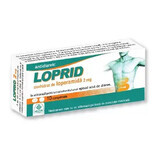
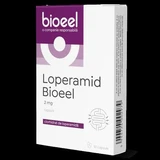
LOPERAMIDE AUROVITAS 2 MG 20 CAPSULES
Description
ACTION AND MECHANISM
- [ANTIDIARRHEAL], [OPIACETIC AGONIST (MU)]. Pethidine derivative. A µ-opiate receptor agonist that inhibits the release of acetylcholine and prostaglandins in Auerbach's myenteric plexus, reducing intestinal peristalsis. By decreasing intestinal transit, it promotes the absorption of water and electrolytes, decreasing the frequency and quantity of bowel movements, and increasing their viscosity. It also has a certain antisecretory effect. It also increases the tone of the anal sphincter, decreasing incontinence.
SPECIAL WARNINGS
- Administering loperamide to patients with diarrhea does not preclude adequate hydration. Therefore, it is advisable to administer fluids such as water, herbal teas, or oral rehydration solutions in the necessary amounts. Symptoms such as thirst, dry mouth and skin, or decreased urine output are clear signs of dehydration.
- It is not advisable to administer loperamide to dehydrated patients before correcting the dehydration.
CONTRAINDICATIONS
- [OPIOID ALLERGY] or to any component of the medication.
- Bloody diarrhea caused by invasive microorganisms such as enteroinvasive strains of Escherichia coli , Salmonella ([SALMONELOSIS]) or Shigella ([SHIGELOSIS]), or in the case of [PSEUDOMEMBRANOUS COLITIS], caused by broad-spectrum antibiotics. In these situations, the use of loperamide is not recommended, since inhibiting peristalsis could increase the contact time between the intestinal mucosa and microbial toxins, increasing the damage. In the case of bacterial diarrhea, it may sometimes be necessary to administer antibiotics.
- Situations in which inhibition of peristalsis is to be avoided, such as [CONSTIPATION], [INTESTINAL OBSTRUCTION], or [ABDOMINAL DISTENSION], since loperamide could aggravate the condition. If any of these symptoms appear during treatment for diarrhea, it is advisable to discontinue treatment.
ADVANCED AGE
No specific problems have been described in the elderly that require dosage adjustment.
Dehydration associated with diarrhea is especially common in the elderly, so its effects can vary greatly.
PREGNANCY
Animal safety: In animal studies using doses 30 times higher than human doses, no fetal harm was seen. Higher doses resulted in alternate maternal and neonatal survival.
Safety in humans: Adequate and well-controlled human studies are lacking. Its administration is only acceptable if there are no safer therapeutic alternatives, and the benefits outweigh the potential risks.
Effects on fertility: No specific studies have been conducted in humans.
PHARMACOKINETICS
- Absorption: It is absorbed in the intestine, with a bioavailability of 40%. It undergoes first-pass metabolism. Cmax is reached after 5 hours (capsules) or 2.5 hours (solutions). Its effects last up to 24 hours.
- Distribution: It circulates bound to plasma proteins (97%). It crosses the blood-brain barrier with great difficulty.
- Metabolism: It is metabolized in the liver, giving rise to inactive metabolites.
- Elimination: It is eliminated by metabolism, with metabolites excreted in the feces (30% unchanged) and a very small amount in the urine (<2%). Its elimination half-life is approximately 10 hours. The fraction of loperamide eliminated in the intestine may be reabsorbed, resulting in enterohepatic cycling.
Pharmacokinetics in special situations:
- Hepatic impairment: The metabolism of loperamide may be decreased in cases of hepatic impairment, resulting in decreased hepatic clearance.
INDICATIONS
- [DIARRHEA]. Symptomatic treatment of acute or chronic diarrheal processes.
INTERACTIONS
- Cholestyramine. A study has shown a possible inhibition of loperamide's effect, so it is recommended to space out administration.
- Laxatives: The administration of antidiarrheals such as loperamide with laxatives that increase intestinal bolus such as ispaghula, methylcellulose, agar or sterculia gum is not recommended, since simultaneous use can cause intestinal obstructions with serious consequences for patients.
- Ritonavir or quinidine (P-glycoprotein inhibitors): possible increase in loperamide Cp. Caution.
- CYP3A4 inhibitors (e.g., ketoconazole or itraconazole) and CYP2C8 inhibitors (gemfibrozil): possible increase in loperamide Cp. Caution.
- Saquinavir: Possible reduction in saquinavir Cp with risk of decreased antiviral activity.
- Theophylline. Pharmacokinetic studies have shown a decrease in theophylline absorption when administered in controlled-release forms, probably due to inhibition of intestinal motility.
- Opioid analgesics. Concomitant use may increase the risk of severe constipation and CNS depression.
LACTATION
Animal safety: no data available.
Human Safety: Data on the excretion of loperamide in breast milk are limited. Small amounts of loperamide have been detected in breast milk, so its use during breastfeeding is not recommended.
CHILDREN
Safety and efficacy in children under two years of age have not been evaluated, so its use is not recommended. Extreme caution is advised in children over 12 years of age, as there may be significant variability in pharmacological response due to dehydration.
RULES FOR CORRECT ADMINISTRATION
It is advisable to divide the dose of loperamide into two or three doses when administered for chronic diarrhea.
POSOLOGY
- Adults, oral:
* Acute diarrhea: 4 mg will be administered initially, followed by 2 mg after each bowel movement.
* Chronic diarrhea: 4 mg will be administered initially, followed by 2-12 mg/24 hours until 1-2 bowel movements are achieved daily.
The maximum daily dose is 16 mg.
* Children under 12 years of age: The safety and efficacy of loperamide in children under 12 years of age have not been evaluated.
DOSAGE IN LIVER FAILURE
No specific dosage recommendations are available. Caution is advised as first-pass metabolism may be impaired.
DOSAGE IN KIDNEY FAILURE
No dosage adjustment is necessary.
PRECAUTIONS
- [LIVER FAILURE]. Loperamide is eliminated through the liver, so in cases of liver failure, first-pass metabolism may be reduced, resulting in drug accumulation. Dosage may need to be adjusted depending on the degree of liver failure.
- [ULCERATIVE COLITIS] or [HIV INFECTION]. In patients with ulcerative colitis or AIDS, the administration of antidiarrheal drugs that inhibit intestinal motility has been associated with an increased incidence of toxic megacolon. Therefore, it is advisable to exercise extreme caution and discontinue treatment if abdominal distension or other symptoms such as severe abdominal pain, nausea, vomiting, or loss of appetite occur.
- [DEHYDRATION]. Inhibition of intestinal peristalsis can lead to fluid retention in the intestinal lumen, worsening dehydration. It is advisable to first correct the patient's dehydration by administering water or oral rehydration solutions.
ADVERSE REACTIONS
The adverse effects of loperamide are generally infrequent, although moderately significant. In most cases, adverse reactions are an extension of the pharmacological action and primarily affect the digestive system. In most cases, they are indistinguishable from the symptoms of diarrhea itself. These adverse reactions are more common with prolonged treatment. The most characteristic adverse reactions are:
- Digestives. Very rarely (<0.01%) the appearance of [ABDOMINAL PAIN], [FLATULENCE], [DYSPEPSIA], [NAUSEA], [VOMITING], [CONSTIPATION], [DRY MOUTH], [ABDOMINAL DISTENSION], [PARALYTIC ILEUS] or [TOXIC MEGACOLON].
- Neurological/psychological. [DROWSINESS] and [DIZZINESS] occur rarely (<0.01%). Children are particularly sensitive to the nervous system effects of loperamide.
- Genitourinary. Occasionally, [URINARY RETENTION] may occur.
- Allergic/dermatological. Very rare (<0.01%) are [SKIN RASHES], [URTICARIA] or [PRURITUS]. Isolated cases of [ANGIOEDEMA], [STEVENS-JOHNSON SYNDROME], [ERYTHEMA MULTIFORME] and [TOXIC EPIDERMAL NECROLYSIS] have been reported, although their relationship with loperamide has not been evaluated.
Isolated cases of [HYPERSENSITIVITY REACTIONS], including [ANAPHYLAXIS], have also been reported.
OVERDOSE
Symptoms: In case of overdose, central nervous system depression may occur, with stupor, drowsiness, miosis, muscle hypertonia, and respiratory depression. Urinary retention or ileal atony may also occur. This overdose is most common in cases of liver failure or in young children.
Treatment: The patient should be monitored for 48 hours to detect possible central nervous system depression. If such symptoms occur, naloxone can be administered as an antidote. Since loperamide's effects last longer than naloxone's, which does not exceed three hours, naloxone may need to be repeated. In addition, it may be advisable to administer activated charcoal after taking loperamide in case of accidental ingestion, followed by gastric lavage if vomiting has not occurred.
Features
| Product code | 505520 |
| Category | Allergies, Over-the-Counter medicines (OTC) |
| Product line | Loperamid |
| Quantity | 20 |
| Delivery from | Spain |
LOPERAMIDE AUROVITAS 2 MG 20 CAPSULES
LOPERAMIDE AUROVITAS 2 MG 20 CAPSULES
Delivery from Spain


Leave your email, and we’ll let you know as soon as it’s back in stock!
Recently viewed products







More products by Loperamid
More products






Reviews

LOPERAMIDE AUROVITAS 2 MG 20 CAPSULES
 Earn € 1 Reward for every review
- For each submitted and approved review you can earn € 1 Reward on your Rewards Credit.
- Rewards are given once for each purchased product you have reviewed.
- You have to be authorised to receive Rewards
All reviews

There are no reviews for this product.












 Description