Promo code APP3 – € 3 discount on your first order in app
  Free delivery for orders over € 49

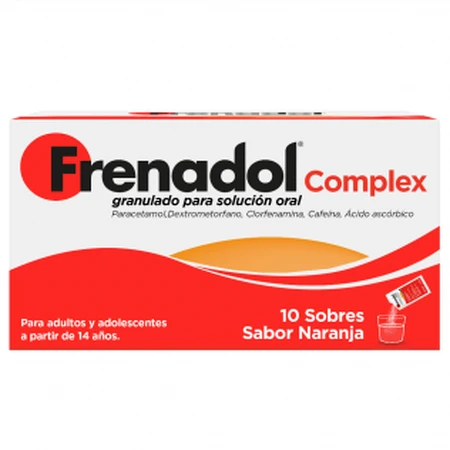


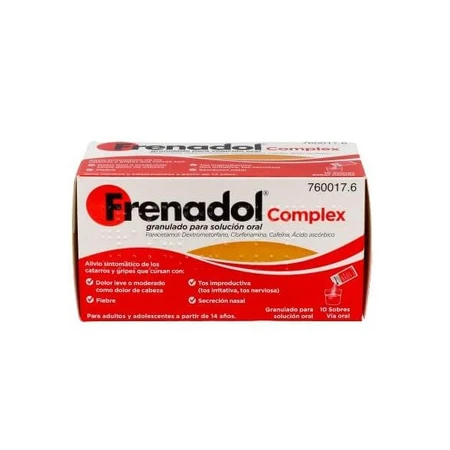


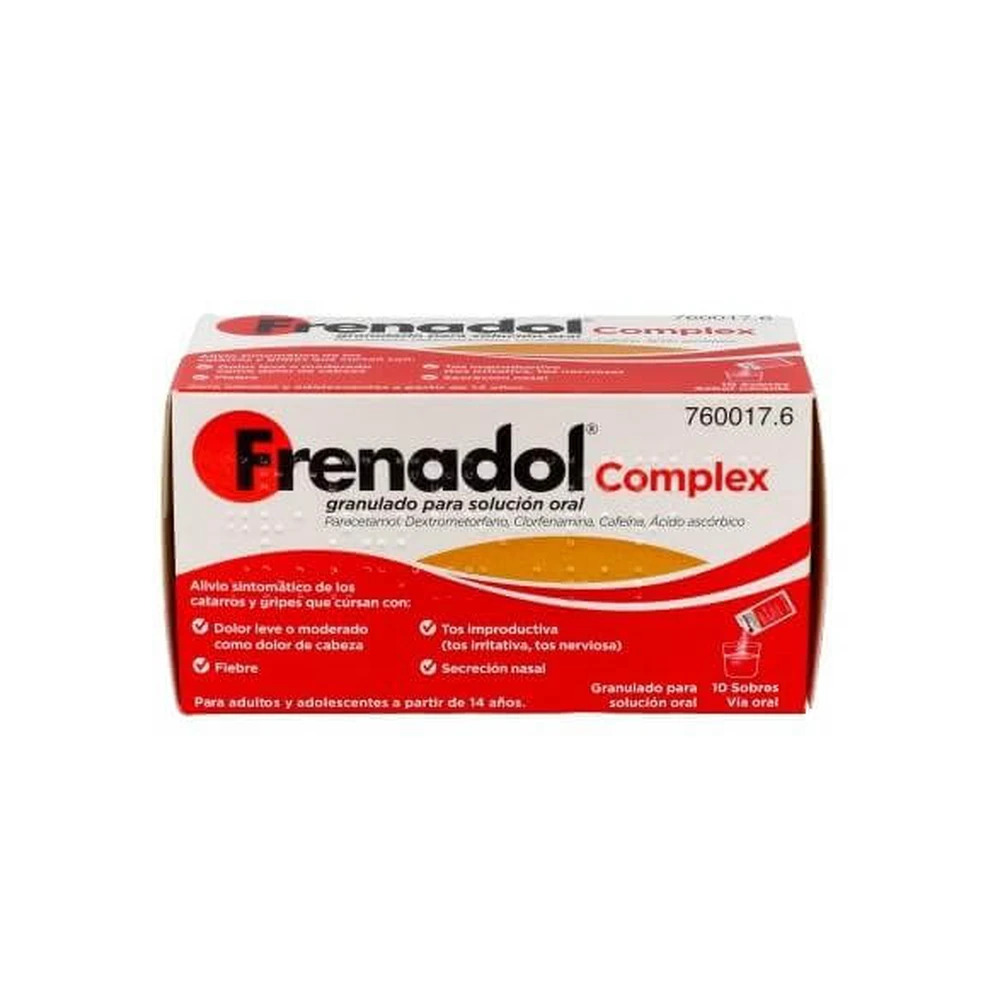


FRENADOL COMPLEX 10 SACHETS
Description
Action and mechanism
- Combination of an [ANALGESIC] [ANTIPYRETIC], a [HISTAMINERGIC (H-1) ANTAGONIST] and a [ANTITUSSIVE]. Paracetamol exerts analgesic and antipyretic effects probably due to the inhibition of central prostaglandin synthesis. Chlorphenamine acts as a histaminergic and muscarinic antagonist, eliminating cold symptoms such as sneezing, whining or rhinorrhea. Finally, dextromethorphan produces depression of the cough center.
Indications
- [COMMON COLD]. Symptomatic treatment of catarrhal processes and [FLU] that present with fever, moderate pain, headache, unproductive cough and rhinorrhea.
Posology
Dosage:
- Adults, oral: 1 sachet/6-8 hours.
- Children, oral:
* Children 12 years and older: 1 sachet/6-8 hours.
* Children between 6-11 years: 1/2 sachet/6-8 hours.
* Children under 6 years of age: The safety and efficacy of this medicine have not been evaluated.
The maximum duration of treatment will be five days, after which, if symptoms persist, it is advisable to consult a doctor for further evaluation.
Rules for correct administration
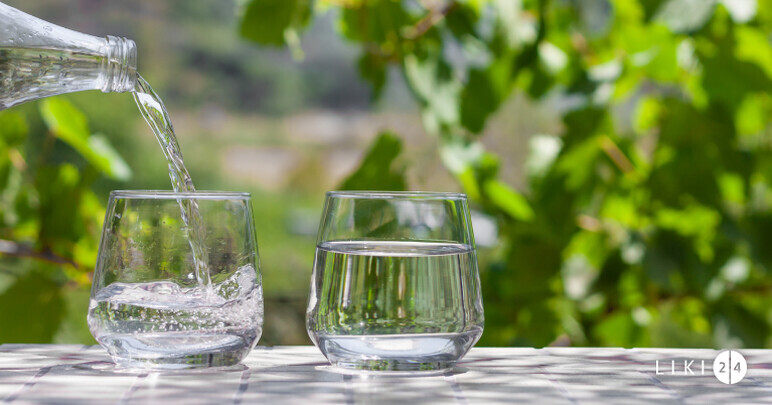
The sachets should be dissolved in half a glass of water and then swallowed. This medication should be started as soon as the first symptoms appear. As these symptoms disappear, the medication should be discontinued.
Contraindications
- Hypersensitivity to any component of the medication, including cases of [PARACETAMOL ALLERGY], [OPIOID ALLERGY] or [XANTHINE ALLERGY].
- [LIVER DISEASE], such as [LIVER FAILURE] or [HEPATITIS]. Paracetamol may cause hepatotoxicity.
- [PORPHYRIA]. H1 antihistamines are not considered safe in patients with porphyria.
- Patients receiving treatment with MAOI or SSRI type antidepressants (See Interactions).
Warnings on excipients:
- This medicinal product contains sucrose. Patients with hereditary [FRUCTOSE INTOLERANCE], glucose-galactose malabsorption, or sucrase-isomaltase insufficiency should not take this medicinal product.
Precautions
- [RENAL FAILURE]. Accumulation of the active ingredients may occur. Renal adverse reactions to paracetamol are more common in these patients.
- Patients suffering from [GLAUCOMA], [PROSTATIC HYPERPLASIA] or [URINARY BLADDER OBSTRUCTION], [ARTERIAL HYPERTENSION], [CARDIAC ARRHYTHMIA], [MYASTHENIA GRAVIS], stenosing [PEPTIC ULCER] or [INTESTINAL OBSTRUCTION]. Chlorphenamine may worsen these conditions due to its anticholinergic effects.
- Persistent or chronic cough, such as that associated with [ASTHMA], [PULMONARY EMPHYSEMA] or [CHRONIC OBSTRUCTIVE PULMONARY DISEASE]. Chlorphenamine and dextromethorphan may worsen these conditions due to the increase in the viscosity of secretions and the inhibition of cough. Bronchospastic reactions have been described when administering paracetamol to asthmatic patients with [SALICYLATE ALLERGY], therefore special caution is recommended in these patients.
- [EPILEPSY]. Some H1 antihistamines have been associated with the occurrence of seizures.
- [BLOOD DYSCRASIAS]. Paracetamol may occasionally cause [ANEMIA], [LEUKOPENIA], or [THROMBOPENIA]. Extreme caution is recommended, avoiding prolonged treatment, and performing periodic blood counts in these cases.
- Hepatotoxicity. The metabolism of paracetamol may produce hepatotoxic substances. It is recommended to avoid its use in patients with previous liver damage (see Contraindications), and to exercise extreme caution in those with chronic alcoholism or other factors that could trigger hepatotoxicity. It is advisable to avoid prolonged treatment and not exceed doses of 2 g/24 hours in these patients. It is also recommended to monitor transaminase levels, discontinuing treatment if they increase significantly.
- [ANXIETY] and other conditions such as [HYPERTHYROIDISM] or cardiac arrhythmias, in which the administration of caffeine could worsen the symptoms.
- History of [KIDNEY STONES]. Ascorbic acid may promote the formation of kidney stones.
- [HEMOCHROMATOSIS]. Vitamin C may cause iron poisoning. Avoid prolonged treatment.
- Dependence. Although very rare, cases of dependence on dextromethorphan products have been reported. Extreme caution is recommended, and patients, especially children, should be monitored for signs of abuse.
Warnings on excipients:
- This medicine contains sunset yellow S as an excipient. It may cause allergic reactions including asthma, especially in patients with [SALICYLATE ALLERGY].
Patient Advice
- It is advisable to drink plenty of water during treatment, avoiding alcoholic beverages as much as possible.
- Any change in the patient's behavior or mood should be reported to the physician.
- It is recommended not to exceed the recommended daily doses and avoid treatments lasting longer than five days without a doctor's prescription.
- If symptoms persist or worsen after five days, it is recommended to consult a doctor.
- The doctor should be notified of any medication the patient is taking, especially antidepressants.
- Patients with glaucoma or urinary retention should notify their physician before starting treatment.
- It can cause drowsiness, so it is recommended to be cautious when driving and not to combine it with medications or other sedative substances such as alcohol.
Special warnings
- It is recommended to monitor the patient for signs of abuse.
- In patients treated with anticoagulants, it is recommended to follow short courses with low doses, monitoring coagulation parameters.
- The combination of products containing dextromethorphan and antidepressants should be avoided, allowing at least 14 days of rest between the administration of both drugs.
- Blood counts are recommended in patients treated with high doses or for prolonged periods of time.
- It is advisable to monitor transaminase levels in patients with prolonged treatment or at risk of hepatotoxicity.
- In case of overdose, the specific antidote for paracetamol is N-acetylcysteine.
Interactions
- Ethyl alcohol. Consuming alcoholic beverages with paracetamol may cause liver damage. Furthermore, the sedative effects of chlorphenamine may be enhanced. It is recommended to avoid alcohol during treatment. Chronic alcoholics should not administer more than 2 g of paracetamol per 24 hours.
- Algeldrate. Ascorbic acid may increase aluminum absorption. It is suggested that the administration of both medications be spaced out.
- Antiarrhythmics (amiodarone, quinidine). Cases of dextromethorphan toxicity have been reported when combined with certain antiarrhythmics.
- Oral anticoagulants. In very rare cases, usually at high doses, the anticoagulant effects may be enhanced by paracetamol's inhibition of hepatic synthesis of coagulation factors. Ascorbic acid, for its part, may reduce the effects of warfarin when administered at high doses. It is recommended to administer the lowest dose, with the shortest possible treatment duration, and monitor the INR.
- Anticholinergics (antiparkinsonian drugs, tricyclic antidepressants, MAOIs, neuroleptics). Chlorphenamine may enhance the anticholinergic effects, so the combination is recommended to be avoided.
- Oral contraceptives. They may increase the plasma clearance of paracetamol, decreasing its effects. Ascorbic acid, for its part, may promote the accumulation of drugs such as ethinylestradiol.
- Antidepressants (MAOIs, SSRIs). Co-administration of dextromethorphan products with MAOIs or SSRIs could lead to serious adverse reactions, even fatal. It is recommended to avoid this combination and not administer dextromethorphan until at least 14 days after treatment with the antidepressant.
- Activated charcoal. It can adsorb paracetamol, decreasing its absorption and pharmacological effects.
- Chloramphenicol. The toxicity of paracetamol may be enhanced, probably by inhibiting its metabolism.
- Coxibes. Coxibes may increase plasma concentrations of dextromethorphan.
- Deferoxamine. Iron may accumulate in tissues, so it may be necessary to reduce vitamin C doses.
- Nerve stimulants (amphetamines, cocaine, xanthines). Nerve stimulation may be enhanced, leading to intense excitability.
- Expectorants and mucolytics. Cough suppression by dextromethorphan could lead to pulmonary obstruction if the volume or fluidity of bronchial secretions increases.
- Enzyme inducers. Medications such as barbiturates, carbamazepine, hydantoin, isoniazid, rifampicin, or sulfinpyrazone may induce paracetamol metabolism, decreasing its effects and increasing the risk of hepatotoxicity.
- Lamotrigine. Paracetamol may reduce serum concentrations of lamotrigine, resulting in a decreased therapeutic effect.
- Propranolol. Propranolol may inhibit paracetamol metabolism, leading to toxic effects. Ascorbic acid, for its part, may reduce propranolol plasma levels.
- Sedatives (opioid analgesics, barbiturates, benzodiazepines, antipsychotics). The co-administration of chlorphenamine with a sedative drug may enhance the hypnotic action.
- Zidovudine. Paracetamol may increase the elimination of zidovudine, decreasing its effects.
Pregnancy
Some active ingredients in this specialty are able to cross the placental barrier. The safety and efficacy of this medication in pregnant women have not been evaluated, so it is recommended to avoid its administration unless there are no safer therapeutic alternatives and whenever the benefits outweigh the potential risks.
Lactation
Some of the active ingredients in this medicine are excreted in milk, so it is recommended to stop breastfeeding or avoid using this medicine in pregnant women.
Children
The safety and efficacy of this medicine have not been evaluated in children under 6 years of age, so its use is not recommended.
Seniors
Elderly patients may be more susceptible to the adverse effects of this medication, so it is recommended to use it with caution and discontinue its administration if adverse reactions are not tolerable.
Effects on driving
This medication may substantially impair the ability to drive and/or operate machinery. Patients should avoid operating hazardous machinery, including automobiles, until they are reasonably certain that drug treatment does not adversely affect them.
Adverse reactions
The adverse reactions described are:
- Digestive. Anticholinergic symptoms such as [NAUSEA], [VOMITING], [DRY MOUTH], [DIARRHEA] and [CONSTIPATION] may occur. [ANOREXIA] is less common.
- Liver. Occasionally [LIVER DISEASE] may occur with or without [JAUNDICE].
- Cardiovascular. [HYPOTENSION] in the elderly and [TACHYCARDIA].
- Neurological/psychological. The most common adverse reaction is [DROWSINESS]. Paradoxical reactions of [EXCITABILITY], with [NERVOUSNESS] and [INSOMNIA] may also occur, and are particularly common in children and the elderly.
- Genitourinary. [URINARY RETENTION].
- Allergic/dermatological. Rarely [HYPERSENSITIVITY REACTIONS], with [URTICARIA], [EXANTHEMATOUS RASHES], [EXCESSIVE SWEATING] and [PHOTOSENSITIVITY REACTIONS].
- Ophthalmological. [MYDRIASIS], [BLURRED VISION], [OCULAR HYPERTENSION].
- Sanguine. [ANEMIA], [HEMOLYTIC ANEMIA], [LEUCOPENIA] with [NEUTROPENIA] or [GRANULOCYTOPENIA], and [THROMBOPENIA].
- Metabolic. Rarely [HYPOGLYCEMIA].
Overdose
Symptoms: Overdose with paracetamol-containing products is a very serious and potentially fatal poisoning. Symptoms may not appear immediately and may take up to three days to appear. These symptoms include confusion, excitability with restlessness, nervousness and irritability, dizziness, nausea and vomiting, loss of appetite, and liver damage. Hepatotoxicity usually manifests within 48–72 hours with nausea, vomiting, anorexia, malaise, sweating, jaundice, abdominal pain, diarrhea, and liver failure.
In children, drowsiness and changes in gait also occur.
In the most severe cases, death may occur due to hepatic necrosis or acute renal failure.
The minimum toxic dose of paracetamol is 6 g in adults and 100 mg/kg in children. Doses above 20-25 g of paracetamol are potentially fatal.
In addition to the symptoms of a paracetamol overdose, symptoms of chlorphenamine overdose (deep sedation, anticholinergic symptoms) may also occur. Dextromethorphan overdose does not usually produce severe symptoms, although increased sedation is expected.
Treatment: In case of an overdose, seek medical attention immediately, as paracetamol poisoning can be fatal, even if symptoms are asymptomatic. Early identification of paracetamol overdose is especially important in children, due to the severity of the condition and the availability of treatment options.
In any case, gastric lavage and aspiration of the stomach contents should be performed initially, preferably within four hours of ingestion. The administration of activated charcoal may reduce the amount absorbed.
There is a specific antidote for paracetamol poisoning: N-acetylcysteine. The recommended dose is 300 mg/kg of N-acetylcysteine, equivalent to 1.5 ml/kg of a 20% aqueous solution with a pH of 6.5, intravenously, over a period of 20 hours and 15 minutes, according to the following schedule:
- Adults. A loading dose of 150 mg/kg (0.75 ml/kg of 20% solution) should be administered initially by slow intravenous injection over 15 minutes, either directly or diluted in 200 ml of 5% dextrose.
A maintenance dose of 50 mg/kg (0.25 ml/kg of 20% solution) in 500 ml of 5% dextrose will then be started by slow intravenous infusion over 4 hours.
Finally, 100 mg/kg (0.50 ml/kg of 20% solution) in 1000 ml of 5% dextrose will be administered by slow intravenous infusion over 20 hours.
- Children. The same amounts per unit of weight should be administered as for adults, but the dextrose volume should be adjusted based on the child's age and weight to avoid vascular congestion.
The antidote's effectiveness is greatest if administered within 8 hours of ingestion. Its effectiveness gradually decreases thereafter and is ineffective after 3 hours.
Administration of 20% N-acetylcysteine may be discontinued when blood paracetamol levels are below 200 µg/ml.
In addition to administering the antidote, symptomatic treatment will be initiated, keeping the patient under clinical surveillance.
In the event of hepatotoxicity, liver function testing is recommended and the test should be repeated at 24-hour intervals.
Features
| Product code | 506017 |
| Category | Cold and Flu Medicines, Over-the-Counter medicines (OTC), Promotions, Useful kits, Health and wellness products -35% |
| Product line | FRENADOL |
| Range | Complex |
| Quantity | 10 |
| Product type | Sachets |
| Delivery from | Spain |
FRENADOL COMPLEX 10 SACHETS
FRENADOL COMPLEX 10 SACHETS
Delivery from Spain

 24 Aug - 2 Sep

 Guaranteed delivery from Spain: 24 August - 2 September
-
€ 27,20€ 21,10Delivery: € 5,99 (free from € 49)
Delivery from Spain:
24 August - 2 September
-
 Pay securely with your preferred payment method












Recently viewed products




More products by FRENADOL
More products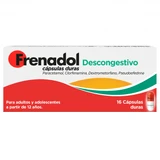





Reviews

FRENADOL COMPLEX 10 SACHETS
 Earn € 1 Reward for every review
- For each submitted and approved review you can earn € 1 Reward on your Rewards Credit.
- Rewards are given once for each purchased product you have reviewed.
- You have to be authorised to receive Rewards
All reviews

There are no reviews for this product.









 Description