Promo code APP3 – € 3 discount on your first order in app
  Free delivery for orders over € 49


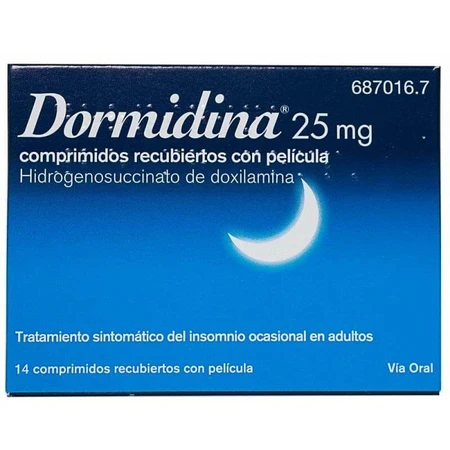


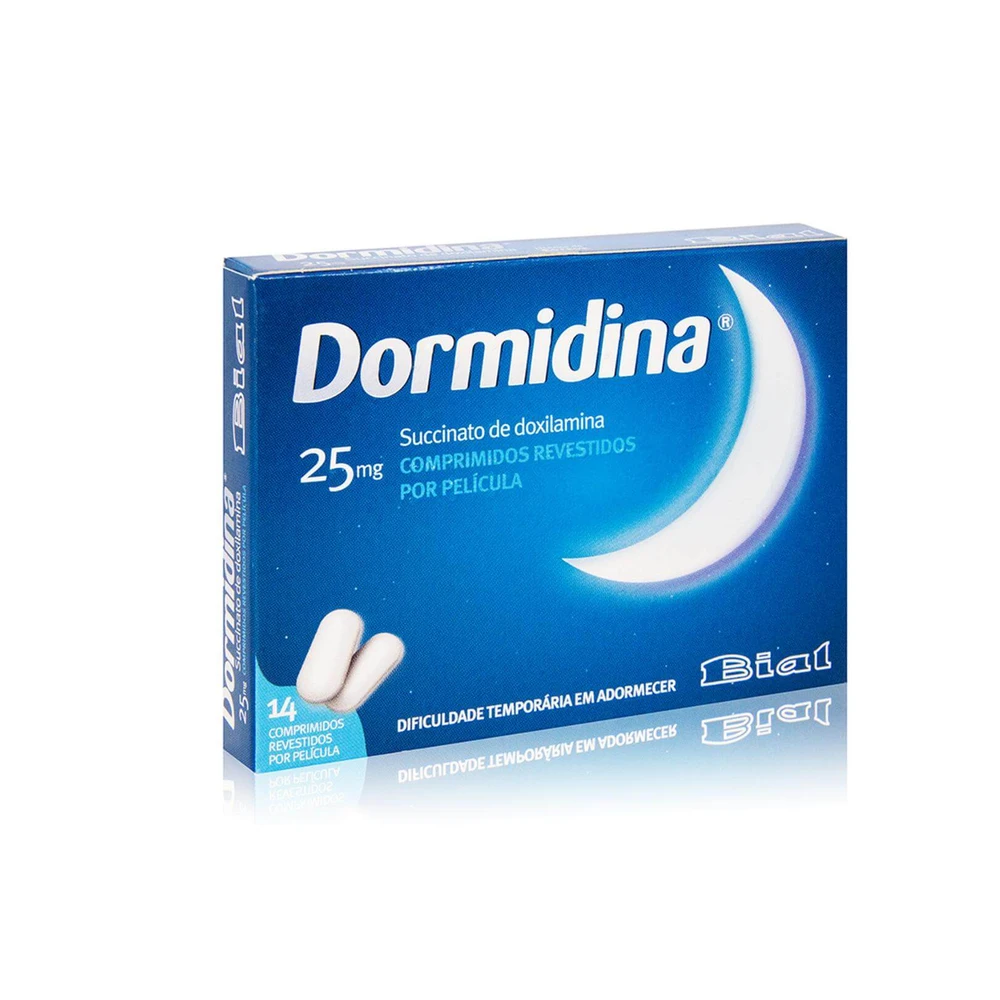
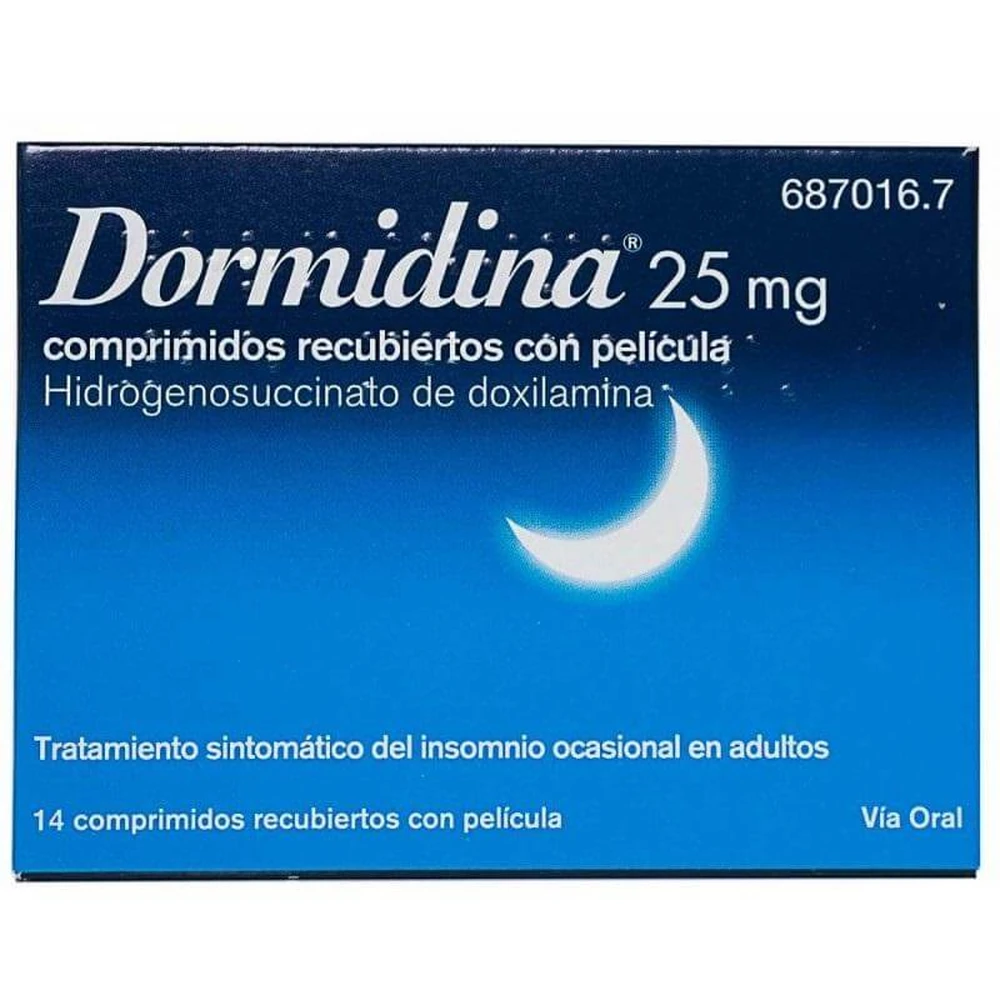




DORMIDINE 25 MG 14 TABLETS
Description
Action and mechanism
- [ANTIALLERGIC], [HISTAMINERGIC ANTAGONIST (H-1)]. Doxylamine is an ethanolamine derivative that competitively, reversibly, and nonspecifically blocks H1 receptors, decreasing the systemic effects of histamine. It causes vasoconstriction and decreased vascular permeability, reducing the redness and edema associated with allergies. It partially mitigates symptoms associated with allergic processes such as eye redness or nasal congestion. It also produces a mild bronchodilator effect and reduces skin itching.
- [HYPNOTIC]. Doxylamine is able to cross the blood-brain barrier and act on central H1 receptors, resulting in sedation. The sedative effect may also be due to antagonism of muscarinic and serotonergic receptors. Doxylamine has a sedative effect greater than that of other ethanolamines.
- [MUSCARINIC CHOLINERGIC ANTAGONIST (M)], [ANTIEMETIC]. Doxylamine is a nonspecific antagonist capable of blocking other receptors such as central or peripheral muscarinic receptors. Its anticholinergic effects appear to be less potent than those of other ethanolamines. Blockade of central H1 and cholinergic receptors could exert an antiemetic effect, although this is not fully understood.
Pharmacokinetics
Oral route:
- Absorption: Doxylamine is well absorbed from the intestine, but undergoes a strong first-pass effect in the liver, which reduces bioavailability. After administration of a 25 mg dose, the Cmax of 100 ng/ml is reached within 2–3 hours. Sedative effects begin after 30 minutes and peak after 1–3 hours. These effects last 6–8 hours.
- Metabolism: Although not adequately studied, doxylamine appears to be rapidly and almost completely metabolized in the liver.
- Elimination: Doxylamine and its metabolites are eliminated in urine. Its elimination half-life is 10 hours.
Indications
- [INSOMNIA]. Symptomatic treatment of insomnia, particularly when there is difficulty falling asleep, frequent interruptions during sleep, or early awakening.
Posology
Dosage:
- Adults, oral: 12.5-25 mg/24 hours.
- Children and adolescents under 18 years of age, oral: The safety and efficacy of doxylamine in children and adolescents under 18 years of age have not been evaluated. If doxylamine is necessary for use in individuals under 18 years of age, it is recommended that doses not exceeding 25 mg/24 hours be used.
Treatments lasting longer than one week should be avoided.
Rules for correct administration
Doxylamine should be administered half an hour before bedtime to allow it to take full effect.
Contraindications
- Hypersensitivity to any component of the medication. Cross-reactions with other antihistamines may occur, so the use of any H1 antihistamine is not recommended in patients who have previously experienced hypersensitivity to any component of this group.
- [ASTHMA ATTACK]. Some authors believe that doxylamine could worsen asthma, so its use is not recommended in an acute attack.
- [PORPHYRIA]. H1 antihistamines have been associated with the development of porphyria flares and are therefore not considered safe in these patients.
Precautions
- [RENAL INFECTION]. Accumulation of metabolites may occur in patients with renal impairment. Because these metabolites may be active, prolonged administration is recommended in patients with moderate or severe renal impairment (CLcr less than 60 ml/minute).
- [LIVER FAILURE]. Doxylamine is extensively metabolized by the liver. In cases of liver failure, an increase in plasma concentration may occur, with a consequent risk of adverse effects. Dosage adjustment may be necessary in these patients depending on the degree of liver function.
- Patients suffering from [GLAUCOMA], [PROSTATIC HYPERPLASIA] or [URINARY BLADDER OBSTRUCTION], [ARTERIAL HYPERTENSION], [CARDIAC ARRHYTHMIA], [MYASTHENIA GRAVIS], stenosing [PEPTIC ULCER] or [INTESTINAL OBSTRUCTION]. Due to the anticholinergic effects of doxylamine, these conditions may worsen; therefore, extreme caution is recommended and treatment should be discontinued if worsening occurs.
- Lower respiratory tract diseases, such as [ASTHMA], [PULMONARY EMPHYSEMA], or [CHRONIC OBSTRUCTIVE PULMONARY DISEASE]. According to some authors, doxylamine may decrease the volume of bronchial secretions, increasing their viscosity, due to its anticholinergic effects, which could aggravate these conditions. However, there is not much clinical evidence, despite which, extreme caution is recommended in these patients. As a general rule, its use is not recommended in patients with asthma attacks (See Contraindications).
- [EPILEPSY]. Caution should be exercised in patients with epilepsy, since antihistamines have occasionally been associated with paradoxical hyperexcitability reactions, even at therapeutic doses, and may therefore lower the seizure threshold.
- [APPENDICITIS]. Due to its antiemetic effects, it may interfere with the diagnosis of appendicitis. It is recommended that appendicitis be ruled out in advance in patients with vomiting of unknown origin.
- Ototoxicity. Doxylamine may have a beneficial effect on vertigo, tinnitus, and dizziness, and may therefore mask ototoxicity induced by ototoxic drugs such as parenteral aminoglycosides, carboplatin, cisplatin, chloroquine, and erythromycin, among others.
- Photosensitivity. Doxylamine may cause photosensitivity, so it is recommended to avoid sunbathing during treatment and to protect yourself with sunscreen.
- Extreme temperatures. H1 antihistamines may aggravate heat exhaustion syndrome and heat stroke due to the decreased sweating caused by their anticholinergic effects. Patients receiving these medications are advised to avoid exposure to very high temperatures, especially young children, the elderly, or people with serious chronic illnesses. It is also advisable to follow appropriate hygiene and dietary measures, such as adequate ventilation and hydration.
Patient Advice
- This medication will be administered half an hour before bedtime.
- Treatments lasting longer than one week are not recommended. If insomnia persists or worsens after this time, it is recommended to consult a doctor.
- It can cause drowsiness, so it is recommended to be cautious when driving and not to combine it with medications or other sedative substances such as alcohol.
- Patients receiving sedative drugs are not advised to self-medicate with doxylamine products without consulting a physician.
- It is advisable not to sunbathe during treatment.
- The doctor must be notified of any chronic pathology the patient has before starting treatment.
- Exposure to extreme temperatures should be avoided while using this medication, by staying in a cool environment and staying adequately hydrated.
Special warnings
- Doxylamine may mask the ototoxic effects of some drugs, so it is recommended to periodically assess acoustic function in patients treated with these drugs.
- Before using this medicine in patients with vomiting of unknown origin, it is recommended to rule out the presence of appendicitis.
- It is recommended to monitor the patient's hydration during a heat wave, especially if the patient is a young child, an elderly person, or someone with a serious illness.
- Due to the anti-allergic effects of this medication, it may cause false negative results in skin hypersensitivity tests to antigenic extracts. It is recommended that you discontinue taking this medication at least 72 hours before the test.
Interactions
Doxylamine may mask symptoms induced by ototoxic drugs by reducing vertigo or dizziness. It may also enhance the photosensitizing effects of other active ingredients, leading to photosensitivity reactions. Drug interactions have also been reported with the following active ingredients:
- Ethyl alcohol. The combined administration of alcohol and doxylamine may enhance the sedative effects of both substances. It is recommended to avoid alcohol consumption during treatment.
- Anticholinergics (antiparkinsonian drugs, tricyclic antidepressants, MAOIs, neuroleptics). The administration of doxylamine with other anticholinergic drugs may potentiate their anticholinergic effects, so the combination is recommended to be avoided.
- Sedatives (opioid analgesics, barbiturates, benzodiazepines, antipsychotics). The co-administration of doxylamine with a sedative drug may potentiate the hypnotic effect. Extreme caution is recommended.
Pregnancy
FDA Category B. Studies in rats at doses 125 times the human dose have not shown any risk to the fetus. However, when administered doses 125-375 times the maximum human dose, skeletal abnormalities, characterized by rib curling and diaphragmatic hernias, have been observed. Doxylamine crosses the placenta. There is considerable controversy regarding the teratogenic effects of doxylamine. This drug has been frequently used to prevent nausea and vomiting during pregnancy. Epidemiological studies have not shown adverse effects on the fetus, although some studies have associated doxylamine administration during the first trimester with cleft palate. However, a causal relationship with doxylamine has not been established, and these effects have not been observed in other studies; therefore, the FDA considers doxylamine unlikely to be teratogenic. However, due to the lack of adequate and well-controlled studies in humans, the possibility of weak teratogenicity cannot be ruled out. This medication should therefore be used in pregnant women with caution, and only if the benefits outweigh the potential risks.
Lactation
Doxylamine may inhibit lactation due to its anticholinergic effects. It is unknown whether doxylamine is excreted in breast milk, but other antihistamines are. Because children are more sensitive to anticholinergic reactions and may more frequently experience paradoxical hyperexcitability reactions, it is recommended that breastfeeding be discontinued or this drug be avoided.
Children
The efficacy and safety of doxylamine as a sedative have not been evaluated in children under 18 years of age. Because anticholinergic symptoms and hyperexcitability are more common in these patients, its use is not recommended.
Seniors
Elderly patients are more sensitive to the adverse effects of antihistamines, such as dizziness, sedation, confusion, hypotension, and hyperexcitability, as well as to anticholinergic effects (dry mouth, urinary retention, precipitation of glaucoma). Antihistamines can be used in patients over 65 years of age, but extreme caution should be exercised. If side effects persist or are severe, discontinuation of treatment is advisable.
Effects on driving
Doxylamine may substantially impair the ability to drive and/or operate machinery. Patients should avoid operating hazardous machinery, including automobiles, until they are reasonably certain that drug treatment does not adversely affect them.
Adverse reactions
The side effects of doxylamine are usually mild and transient, being most common during the first few days of treatment. Like other ethanolamines, doxylamine primarily causes drowsiness and anticholinergic reactions, but there is considerable interindividual variability in the frequency and intensity of symptoms, particularly affecting young children and the elderly. The most common adverse reactions are:
- Digestive. [NAUSEA], [VOMITING], [CONSTIPATION], [DIARRHEA], [EPIGASTRIC PAIN], [ANOREXIA], [DRY MOUTH].
- Neurological/psychological. [DROWSINESS] is common, especially at the start of treatment, and usually decreases after 2-3 days. [DISORIENTATION], [PSYCHOMOTOR LECORDINATION], [MYASTHENIA], [VERTIGO], [ASTHENIA], [HEADACHE] may also occur. Exceptionally, cases of paradoxical [EXCITABILITY] have been observed, especially in young children. This hyperexcitability is accompanied by [INSOMNIA], [NERVOUSNESS], [TREMOR], [IRRITABILITY], [EUPHORIA], [DELIRIUM], palpitations and even [CONVULSIONS].
- Cardiovascular. Occasionally, and usually in the case of an overdose, [tachycardia], [palpitations] and other [cardiac arrhythmias] such as [extrasystole] or [heart block] may occur. These effects could be due to anticholinergic activity. [hypotension] or [high blood pressure] have occasionally been reported.
- Respiratory. Occasionally, there may be an increase in the viscosity of bronchial secretions, which can make breathing difficult.
- Genitourinary. [URINARY RETENTION] and [SEXUAL IMPOTENCE] may occur due to cholinergic blockage.
- Hematological. [HAEMOLYTIC ANEMIA], [AGRANULOCYTOSIS], [LEUCOPENIA], [THROMBOCYTOSIS] or [PANCITOPENIA] have rarely been described.
- Ocular. Due to anticholinergic activity, [GLAUCOMA] and [VISION DISORDERS] such as [BLURRED VISION] or [DIPLOPIA] may occur. [OTOTOXICITY] ([TINNITUS]) may also occur.
- Allergic/dermatological. [HYPERSENSITIVITY REACTIONS] may occur after systemic administration of antihistamines, although less frequently than with topical administration. [PHOTOSENSITIVITY REACTIONS] may also occur after intense exposure to sunlight, with [DERMATITIS], [PRURITUS], [EXANTHEMA], and [ERYTHEMA].
Overdose
Symptoms: Symptoms usually appear within 30 minutes to 2 hours and vary widely, being more severe in children and those over 65 years of age. Moderate nervous breakdown with sedation and apnea, cardiovascular collapse, hyperexcitability with insomnia, hallucinations, tremors, or seizures, and anticholinergic symptoms such as dry mouth, blurred vision, and urinary retention have been reported. Fever above 41.8°C (106°F) may also occur.
In the most severe cases, especially in children, symptoms may worsen, leading to hypotension, seizures, respiratory depression, loss of consciousness, coma, and death. However, doxylamine poisoning is rarely life-threatening, and complete recovery is achieved within 24-48 hours.
Treatment: Treatment will consist of standard measures to promote drug elimination. If less than 3 hours have passed since ingestion, emetics may be administered, taking the necessary precautions to prevent aspiration, especially in children and the elderly. Inducing vomiting is not recommended in comatose or unconscious individuals. If emesis is contraindicated, gastric lavage may be performed and activated charcoal administered. Saline laxatives such as magnesium sulfate may be used.
The symptoms of poisoning can be eliminated with the following drugs.
- Central anticholinergic effects. Intravenous physostigmine.
- Seizures. Slow intravenous infusion of diazepam at a dose of 0.1 mg/kg in patients who do not respond to physostigmine.
- Hypotension. Administer norepinephrine, phenylephrine, or dopamine, avoiding adrenaline, which can worsen hypotension.
- Ventricular arrhythmias. Propranolol.
If necessary, intubation and assisted respiration may be used. The use of analeptics is not recommended, as they may induce seizures.
Features
| Product code | 504129 |
| Category | Anti-stress (OTC), Neurovegetative diseases, Sedatives and Insomnia, Promotions, Useful kits |
| Quantity | 14 |
| Dose | 25 mg |
| Product type | Tablets |
| Delivery from | Spain |
DORMIDINE 25 MG 14 TABLETS
DORMIDINE 25 MG 14 TABLETS
Delivery from Spain

 24 Aug - 2 Sep

 Guaranteed delivery from Spain: 24 August - 2 September
-
€ 19,10€ 14,70Delivery: € 5,99 (free from € 49)
Delivery from Spain:
24 August - 2 September
-
 Pay securely with your preferred payment method













Recently viewed products












Reviews

DORMIDINE 25 MG 14 TABLETS
 Earn € 1 Reward for every review
- For each submitted and approved review you can earn € 1 Reward on your Rewards Credit.
- Rewards are given once for each purchased product you have reviewed.
- You have to be authorised to receive Rewards
All reviews

There are no reviews for this product.















 Description